Best Italian Restaurants in San Francisco You'll Actually Love
North Beach is the obvious starting point, but the city's Italian table stretches well past Columbus Avenue if you know which mythology to trust.
On a Tuesday night in North Beach, the line outside a certain red-sauce institution wraps past the fire hydrant and halfway to the corner. Nobody in that line is from the neighborhood. This is not a complaint, exactly. It is simply the baseline condition of Italian dining in San Francisco, a city where the cuisine arrived with nineteenth-century Genoese fishermen and has since been both preserved and thoroughly mythologized.
Finding the best italian restaurants in san francisco takes a working knowledge of which mythology to trust. Some of it is earned. Some of it is the restaurant equivalent of a souvenir cable car.
Why North Beach Is Still the Right Place to Start
The neighborhood bounded by Broadway, Columbus, and the base of Telegraph Hill remains the historical center of Italian American life in the city. The family-run trattorias that have survived here, past the dot-com booms, the pandemic, the steady grind of rising rents, lasted because they were good enough to outlast fashion. The focaccia at the Italian bakeries on Columbus is not a trend item. It is simply bread, made the same way it has been made for decades. The espresso at the small counters along the strip is not a performance. Order it standing up, leave a small tip, and come back the next morning.
What the neighborhood does less well, these days, is surprise. The surprise is elsewhere.
The Richmond District and the Question of Who Actually Eats Italian There
The Outer Richmond is a neighborhood where the food conversation usually centers on Hong Kong-style seafood and dim sum, and rightly so. But the avenues also hold a quieter population of Italian spots that serve the kind of lunch that does not photograph well and does not need to. Simple pasta, a glass of house red, the fog pressing against the window on Clement Street. These are not destination restaurants in the press-release sense. They are neighborhood restaurants in the original sense, which is a different and better thing.
The Richmond has historically been home to working-class Russian and Chinese families who are not particularly invested in the mythology of Italian American San Francisco, which means the Italian restaurants that survive there tend to earn their keep on food alone. That is a useful filter.
Best Italian Restaurants in San Francisco: What the Categories Actually Mean
Any serious accounting of Italian dining in this city has to distinguish between at least three things that often get collapsed into a single list:
- Red-sauce classics. The North Beach lineage, hearty and generous, designed for groups, better with a carafe of house wine than with anything on a natural wine list.
- Regional Italian. Restaurants organized around a specific tradition, whether that is Ligurian seafood (a natural fit given the city's fishing history) or the more restrained, vegetable-forward cooking of Piedmont or Friuli. These spots tend to be smaller and quieter, and less likely to have a wait on a Friday night because they haven't been written up in the right places yet.
- New Italian. Kitchens run by chefs who trained in Italy or under Italian influence, cooking seasonal California ingredients through an Italian lens. This is where the city's proximity to Marin farms and the Ferry Building Farmers Market pays off most visibly. Crab season in particular rewards this approach: Dungeness with good pasta is one of the more persuasive arguments for living here.
Knowing which category you want before you open a reservation app will save you significant disappointment.
SoMa and the Dinner-Before-a-Show Problem
The neighborhoods around Chase Center and Oracle Park have produced a reliable crop of Italian spots engineered for pre-event dining: large tables, fast service, broad menus, wine by the bottle at a price point that does not require a moment of reflection. There is nothing wrong with this. It solves a real problem. It is also not where you go when you want to eat well.
The better Italian meals in SoMa tend to happen in rooms that are not obviously Italian, run by chefs who came up through Italian kitchens and then opened something that defies category, or in small spots tucked into blocks the food press has not yet assigned a neighborhood narrative to. These are worth tracking. They also tend to close, which is the other baseline condition of dining in this city.
What to Order, Regardless of Where You Go
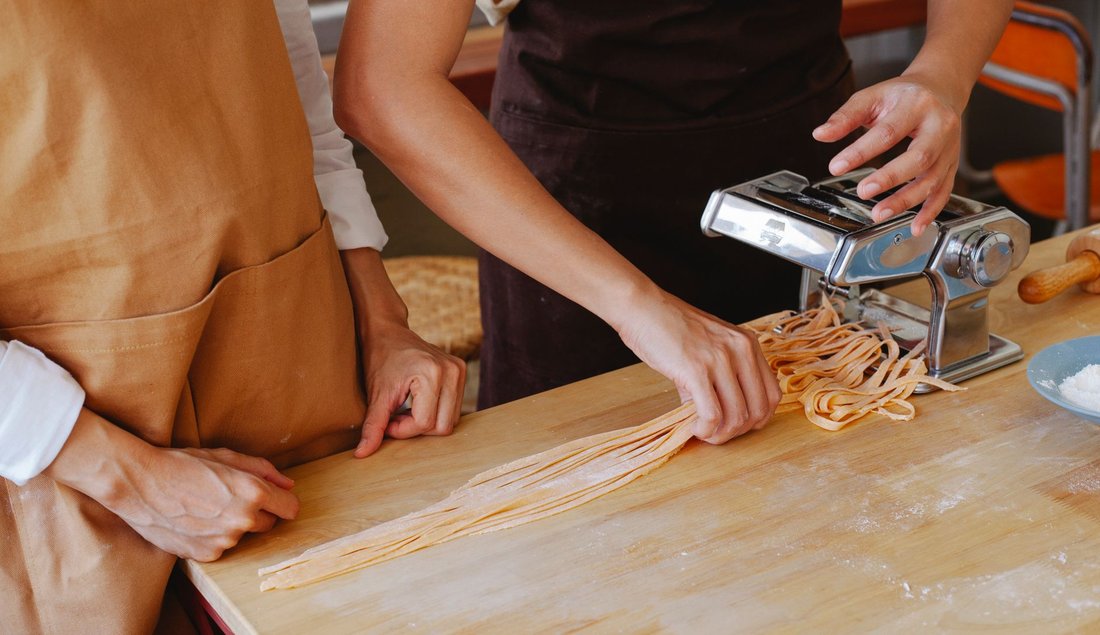
Pasta made in-house remains the most reliable signal of a kitchen that is paying attention. Fresh pasta in San Francisco has the advantage of excellent eggs from nearby farms, and when the kitchen is using them, you can taste it. Order the pasta first and build the meal around it.
If crab is in season, roughly November through June, though the actual opening date shifts with the California Department of Fish and Wildlife's annual negotiations with the fishing fleet, order it. Every Italian kitchen in the city with any coastal instinct does something with Dungeness when it is available. A simple preparation, good olive oil, a little heat: this is the overlap point between Ligurian tradition and Northern California abundance, and it works.
Sourdough is everywhere. You do not need to seek it out. It will find you.
For the broader question of where to eat across the city, the calculus is similar: trust the rooms full of people who live nearby, be skeptical of the ones that show up on every tourist list without a clear reason, and remember that the best meal you eat in San Francisco is often the one you did not plan.
One more thing. The Italian coffee tradition in North Beach is not a gimmick. If you are going to spend an afternoon in the neighborhood, spend part of it at a counter with an espresso rather than walking around with a paper cup. It is a small thing. It changes the experience considerably. The neighborhood's food history runs deeper than any single visit can cover, but this is a reasonable place to start.
The city's Italian table is old enough to have layers. The best restaurants in it, at any price point, are the ones where those layers are still visible, where the food carries some memory of why this cuisine landed here in the first place, and why it stayed.