The Mission Neighborhood Guide: The Local Guide
A walking guide to the Mission from someone who has watched Valencia and 24th Street grow apart and stay tied together for two decades.
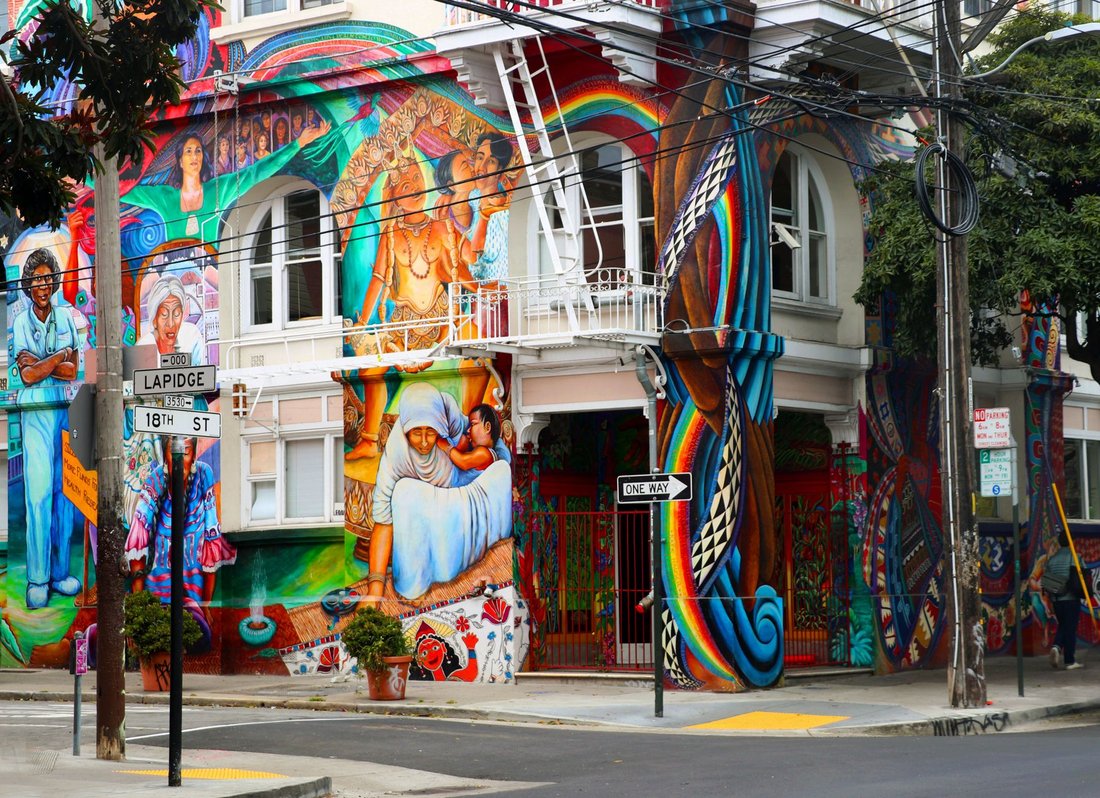
The fog doesn't reach the Mission most days, and that fact shapes everything about how the neighborhood feels next to its foggier neighbors. While the avenues out west sit socked in gray, 24th Street can be seventy degrees and full of sun, old men on folding chairs outside laundromats, kids on bikes cutting between double-parked delivery vans. This is the Mission neighborhood guide long-time residents actually trust, not the one built for a weekend visit, because the Mission rewards people who understand its geography, its history, and its ongoing arguments with itself.
What The Mission Neighborhood Guide Gets Right: Two Streets, Two Neighborhoods
Locals will tell you the Mission isn't one place. Valencia Street and 24th Street run roughly parallel a few blocks apart, and they might as well belong to different cities. Valencia has spent the last two decades absorbing bike lanes, plant-filled storefronts, and a rotating cast of restaurants that open with ambition and sometimes close within a year or two. It's a corridor built for browsing, for the person who wants a bookstore, a bar with a serious cocktail list, a boutique selling things nobody strictly needs.
Walk two blocks south and 24th Street tells an older story. This is the commercial spine of the Latino Mission, where panaderias and taquerias and botanicas have operated for generations, where Spanish is the first language you hear and English the second. The corridor has weathered pressure from rising rents for years, and the tension between the two streets, one increasingly aimed at newcomers with disposable income, the other rooted in a working-class immigrant community, is not backdrop. It's the actual subject of the neighborhood, the thing every honest conversation about the Mission eventually has to address.
The Murals: Balmy Alley and Clarion Alley
No visit to the Mission means much without the murals, and no guide to them should reduce them to photo backdrops. Balmy Alley, tucked between 24th and 25th streets, has been painted and repainted since the early 1970s, when a group of neighborhood artists began using the alley walls to speak about political violence in Central America, about immigration, about the lives of the people who lived around them. The murals change. Artists paint over older work, add new pieces, respond to whatever the moment demands. Clarion Alley, several blocks north, tends toward a rawer, more explicitly political style, closer to graffiti in its energy. Both alleys are free, both are outdoors, and both deserve slow walking rather than a five-minute detour between lunch and a bar.
Dolores Park and the Geography of Sun
Dolores Park sits at the western edge of the neighborhood, climbing a hill that gives it one of the best skyline views in the city, and on a clear weekend afternoon it fills with a cross-section of San Francisco that a lot of neighborhoods can't produce: dog walkers, taco vendors working the paths, groups sprawled across blankets, somebody always playing music too loud for their section of grass. The park's popularity is partly about the Mission's microclimate. While the ocean-facing neighborhoods deal with the marine layer, this stretch of the city often sits in direct sun, which is why residents who don't otherwise cross Twin Peaks will make the trip specifically for Dolores Park on a foggy day elsewhere.
A few blocks from the park stands Mission Dolores, the mission chapel that gave the entire neighborhood its name and its oldest building, older than the city's own incorporation. It's easy to walk past without registering what it is: a low adobe structure next to a much larger basilica, unassuming next to the murals and the taquerias, but it's the actual root of everything else here.
Eating in the Mission Without Getting It Wrong
The Mission burrito, foil-wrapped, stuffed with rice, is one of the city's real culinary exports, and everyone who lives here has a strong and specific opinion about where to get the best one. That argument, the burrito debate, is part of the neighborhood's culture, not a distraction from it. Beyond burritos, the corridor along 24th Street holds a genuine concentration of Latin American cooking, from Salvadoran pupusas to Mexican regional dishes that don't get much attention outside the community that sustains them. Newer restaurants on Valencia lean toward natural wine bars and tasting menus, and both economies now operate a few blocks from each other, sometimes uneasily.
Practical Notes for Visiting
- Parking is difficult most hours; the BART stations at 16th and 24th streets put you within walking distance of almost everything described here.
- Weekday mornings on 24th Street show the neighborhood at its least performative, before the afternoon crowds arrive.
- Respect the murals as working art, not props. Many depict real grief and real politics.
- Dolores Park has no shade to speak of. Bring your own.
The Argument Worth Having
What makes the Mission different from a place like the Castro or Noe Valley, each with its own settled identity, is that the Mission is still actively contesting what it is. The Castro's guide describes a neighborhood that has largely resolved its own story. The Mission hasn't, and that's not a flaw. Rents have pushed out longtime families, murals sometimes get painted over by developers who don't understand what they're erasing, and yet the neighborhood's Latino institutions, its church, its markets, its community organizations, remain active participants rather than historical footnotes. Treating that as scenery, rather than as the central fact of the place, is the fastest way to miss what the Mission actually is.
The real guide to this neighborhood isn't a list of stops. It's an understanding that you're walking through a place still deciding its own future, one taqueria and one mural and one rent increase at a time, and that the fog stopping at its edges is the least interesting thing about it.