Things to Do in Hayes Valley Worth Exploring
A ten-block neighborhood built out of a demolished freeway now holds an opera house, a symphony hall, a jazz club, and a park full of rotating art, and none of it requires a car to see.
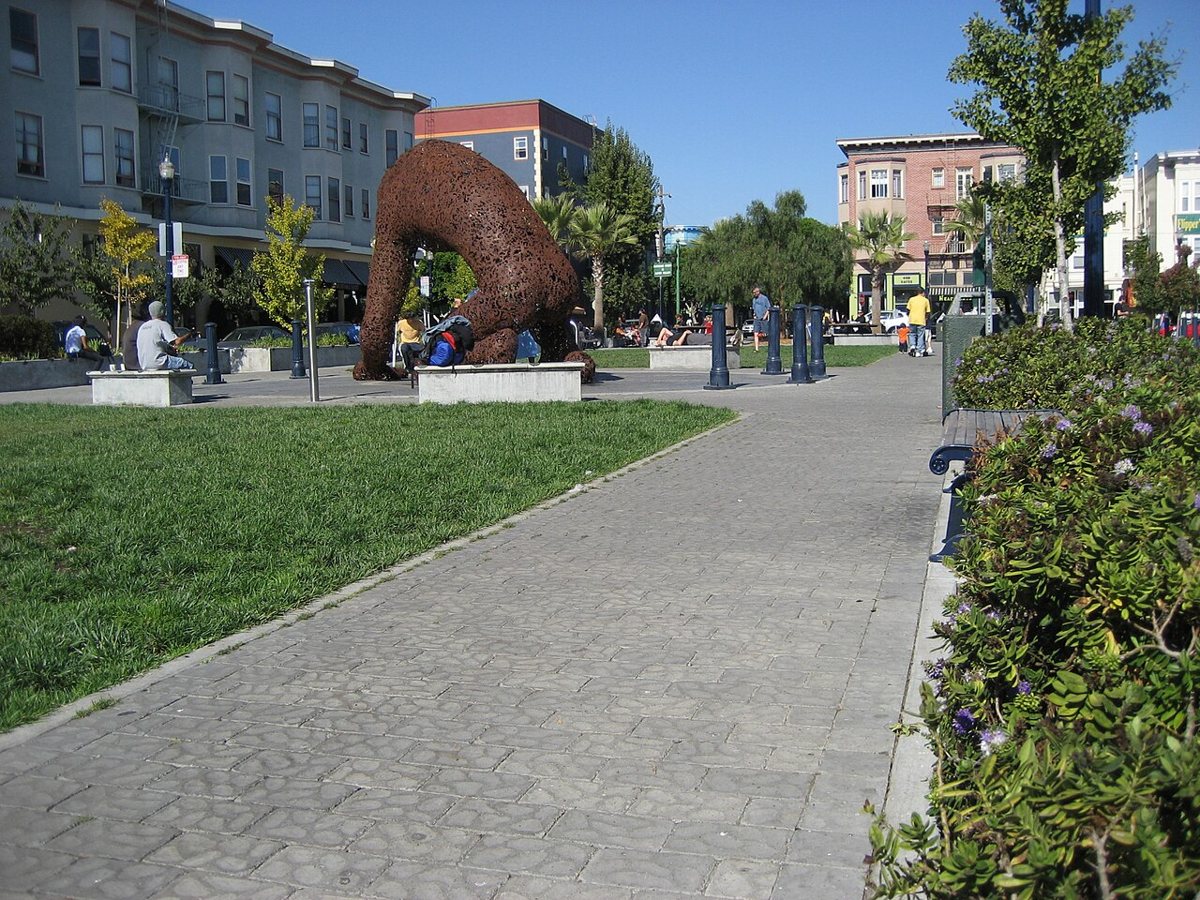

On a Tuesday evening in October, the light over Patricia's Green turns the color of a fading bruise, and the scene playing out on the grass is as fair a start as any for things to do in Hayes Valley. The crowd cutting through the park splits cleanly in two. One half is headed toward the War Memorial Opera House in coats they don't wear the rest of the week, checking phones for curtain time. The other half is in fleece and running shoes, using the park as the fastest route from the Hayes Street shops to the bus stop on Van Ness. Both groups pass a sculpture that has occupied the same patch of grass for a year or two, and neither gives it more than a glance, because in Hayes Valley the grand and the ordinary have learned to share a sidewalk without much fuss. The overlap is the real case for this neighborhood: a stretch of the city compact enough to walk end to end in twenty minutes, built almost by accident after a freeway came down, that now holds a symphony hall, a jazz house, an opera company, and a shopping strip within a few blocks of one another. Few neighborhoods this size in San Francisco pack in so much, and fewer still let a visitor cover all of it without ever needing a car.
Things to Do in Hayes Valley Start With Knowing What Isn't Here Anymore
The neighborhood's whole shape traces back to a piece of infrastructure that no longer exists. The Central Freeway used to run overhead along Octavia Street, throwing shade and noise over what was then a rougher, cheaper stretch of the city. The Loma Prieta earthquake in 1989 cracked its double-decked structure badly enough that the city eventually tore the damaged section down, and after years of ballot fights over whether to rebuild it, San Francisco chose to replace it with a landscaped boulevard instead. That decision, finalized in the early 2000s, is the reason Hayes Valley looks the way it does now: sun actually reaches the sidewalks, the rowhouses that had sat in a freeway's shadow got renovated and filled with tenants, and small storefronts moved in where auto shops and empty lots used to be. Longtime residents remember the before version clearly enough that the neighborhood's current polish still gets discussed with a bit of wonder, and a bit of wariness about what came with it. Understanding that history matters more here than in most San Francisco neighborhoods, because almost everything worth doing in Hayes Valley today sits on land the freeway used to shadow.
Patricia's Green Is the Neighborhood's Living Room
Patricia's Green sits at the center of Hayes Valley, on the footprint once occupied by a freeway on-ramp, and it functions as the closest thing the neighborhood has to a town square. The park is small, really more of a wide green wedge than a proper park, but it does a lot of work: dog walkers cut across it in the morning, office workers eat lunch on its benches, kids climb on the play structure near the north end, and in the evening it fills with people waiting for a table or killing time before a show. What sets it apart from an ordinary pocket park is the public art. Rotating large-scale sculptures have cycled through the space for years under a standing public art program, so the piece anchoring the green changes every year or two, and regulars develop opinions about each one the way people develop opinions about a neighbor's remodel. The insider move is to come at dusk on a weeknight, when the fog is deciding whether to roll in and the park empties out enough that you can actually sit with the art instead of stepping around a crowd. It sits roughly between Hayes and Fell, at Octavia.
Shopping the Hayes Street Corridor
The Corridor Itself
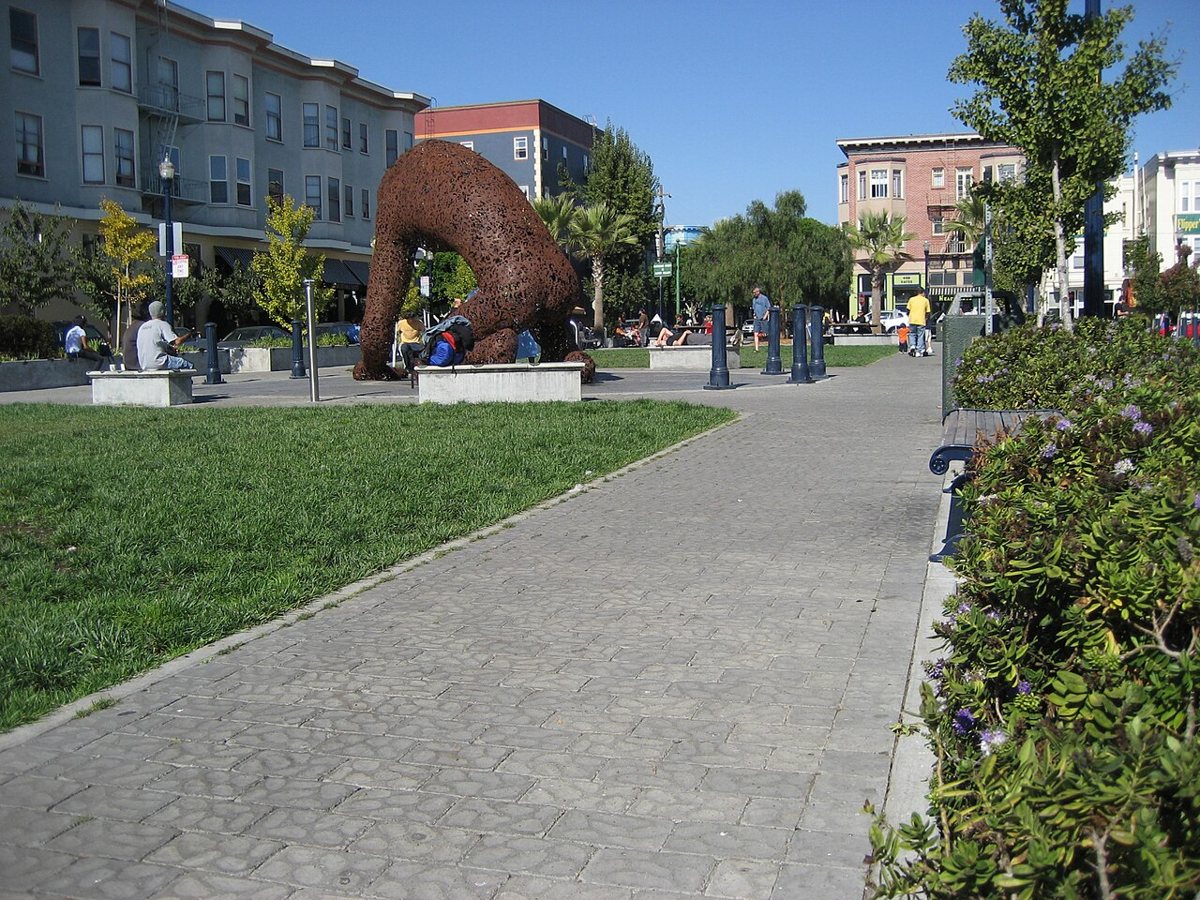
Hayes Street between Franklin and Laguna is the spine of the neighborhood's retail identity, and it earns comparisons to Union Square only in the sense that people come specifically to shop, not to pass through. The corridor runs to independent boutiques rather than chains: design-forward home goods, small clothing labels, a run of wine bars that fill up before performances let out, and enough ice cream and coffee stops to make a slow afternoon walk feel purposeful rather than aimless. What makes it worth blocking out real time for, rather than treating as a five-minute detour, is the density. Nowhere else in the city packs this much independent retail into six walkable blocks without also packing in the crowds that come with a bigger commercial strip. The tip locals give newcomers is to walk down one side of the street and back up the other rather than crossing back and forth, since Hayes is busy enough with foot and bike traffic that constant crossing eats up more time than it should. Go on a weekday afternoon if you want to actually browse; weekend evenings before an opera or symphony performance turn the sidewalks into a scrum.

PROXY
At the corner of Hayes and Octavia, on land that sat vacant for years after the freeway came down, a nonprofit and a design firm built something called PROXY: a cluster of shipping-container-style pavilions meant as a temporary use for a lot still waiting on permanent redevelopment. More than a decade later it's still there, and it's become one of the more quietly interesting things to do in Hayes Valley precisely because it was never supposed to be permanent. Small food vendors, rotating pop-ups, and a beer garden operate out of the modular structures, and the open plaza in between hosts occasional movie nights and markets. It reads as an experiment the city let run long enough to become a fixture, which tracks with how a lot of Hayes Valley actually developed. Stop by on a weekend afternoon when the plaza has some activity going, rather than a weekday morning when the gates are mostly closed. It's a block from Patricia's Green, easy to fold into the same walk.
The Performing Arts Core Is a Few Minutes' Walk East
The War Memorial Opera House
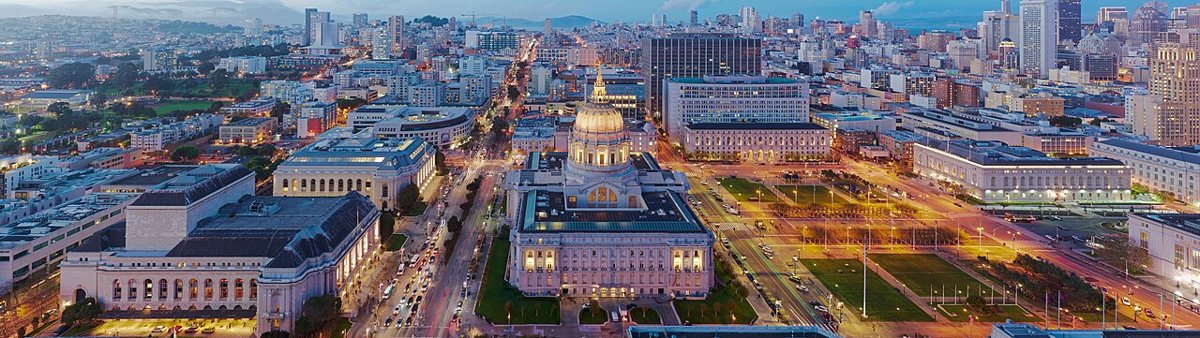
The War Memorial Opera House anchors the southeastern edge of Hayes Valley, a Beaux-Arts building from 1932 that houses both the San Francisco Opera and the San Francisco Ballet. Even for visitors with no ticket, the exterior is worth a slow pass: the scale of the building, the way it faces off against City Hall's dome across the plaza, gives a sense of how seriously the city took its cultural institutions when it built this stretch. For ticket holders, the real Hayes Valley experience happens in the hour before curtain, when the sidewalk cafes and wine bars along Hayes Street fill with people in evening clothes getting a glass in before the doors close. The tip worth knowing: standing room tickets for the opera are a real and often overlooked option for a fraction of the cost of a seat, and the sightlines from the rear of the orchestra level are better than the price suggests. The building sits at Grove and Van Ness, an easy ten-minute walk from Patricia's Green.

Davies Symphony Hall
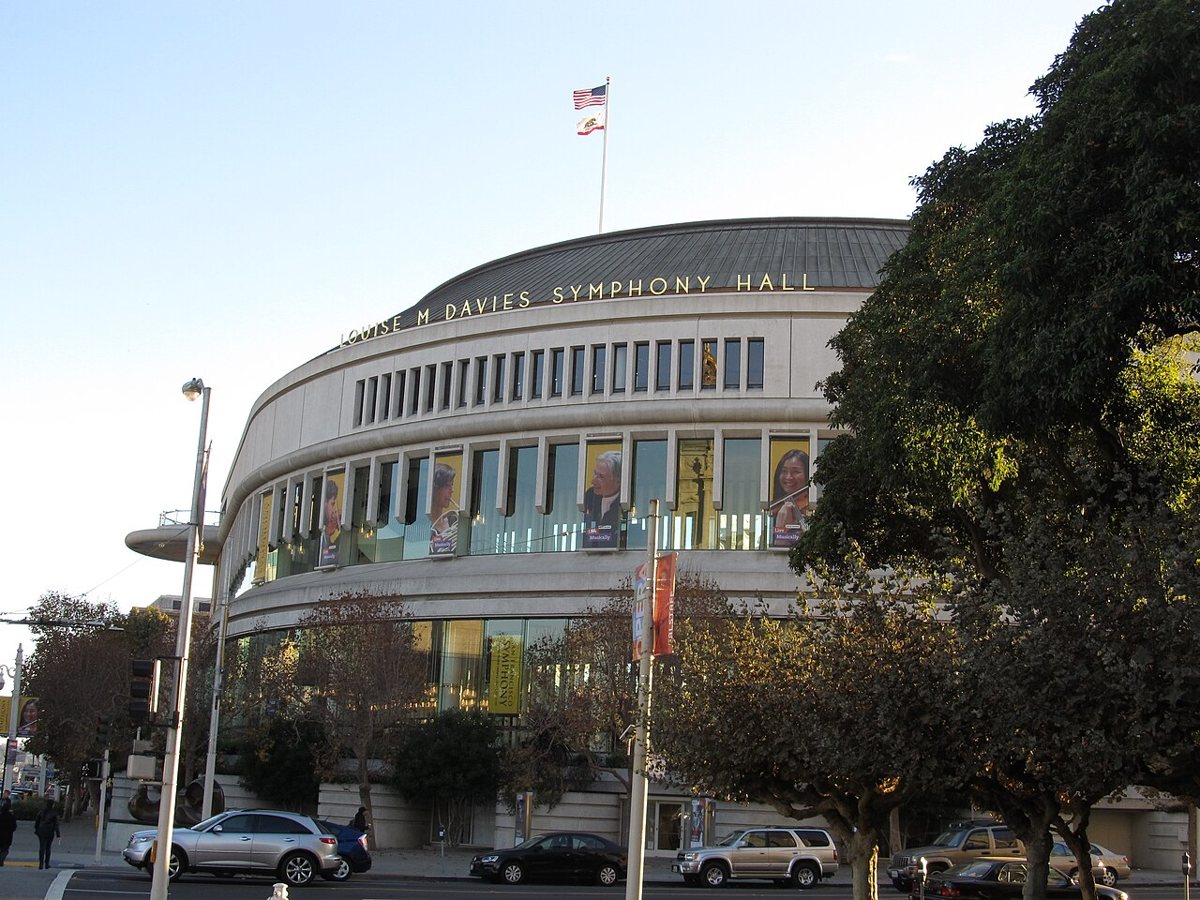
Next door to the opera house, Davies Symphony Hall is home to the San Francisco Symphony and looks the part of a building finished in 1980: curved glass, a modernist counterpoint to its Beaux-Arts neighbor. The acoustics inside get discussed by regulars the way wine gets discussed by people who take it seriously, and the terrace seating behind the orchestra puts you close enough to watch the conductor work, which some longtime subscribers actually prefer to a seat facing the stage head-on. Outside of ticketed performances, the plaza in front of the hall functions as another small gathering spot in the Civic Center corridor, especially on evenings when both the opera and symphony have shows running at once and the crowds mix on the sidewalk between them. Arrive with enough buffer before an 8pm downbeat; the corridor gets genuinely congested in the last fifteen minutes before curtain, between people finishing dinner and people parking in the garage underneath.

The SFJAZZ Center
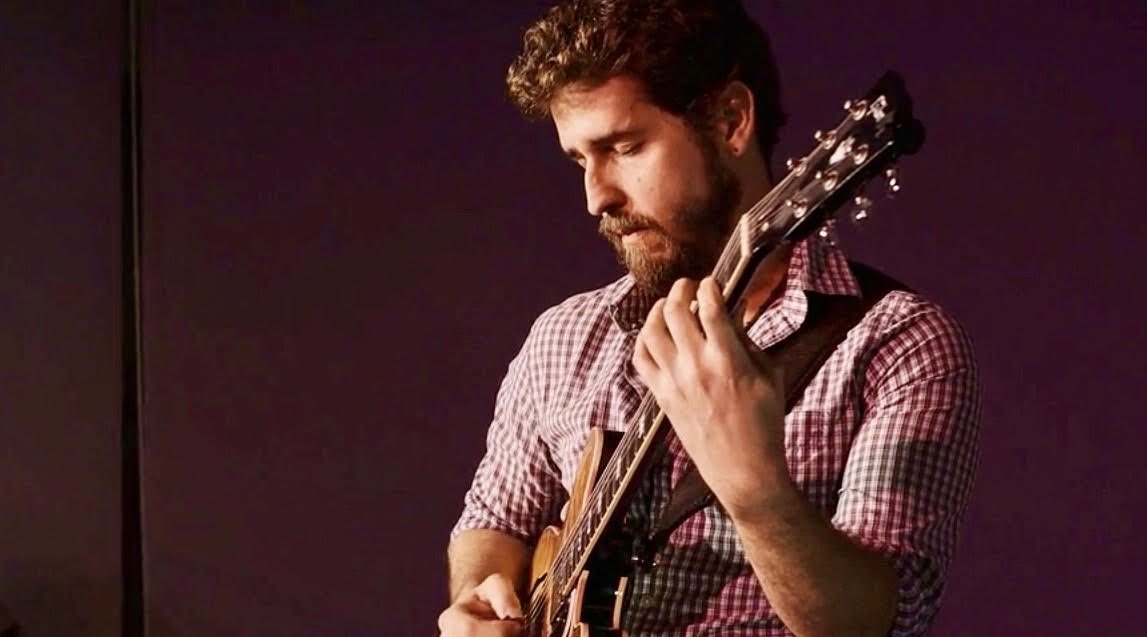
A block or so from the opera house and symphony hall, the SFJAZZ Center opened in 2013 as the first freestanding building in the country built specifically for jazz performance, and it changed the character of the neighborhood's arts scene by adding something looser and less formal than its neighbors. The main performance space wraps the stage on three sides, so even a mid-tier seat puts you close to the musicians, and the dress code runs considerably more relaxed than a night at the opera. Programming leans on resident artistic directors and touring acts that skew toward jazz but wander into related genres often enough that it's worth checking who's on the bill rather than assuming. For a Hayes Valley evening that doesn't require formalwear or a three-hour commitment, this is usually the better bet over the opera or symphony. It sits at Franklin and Fell, close enough to walk from anywhere in the neighborhood.

Civic Center Sits Just East, and It's Worth the Walk
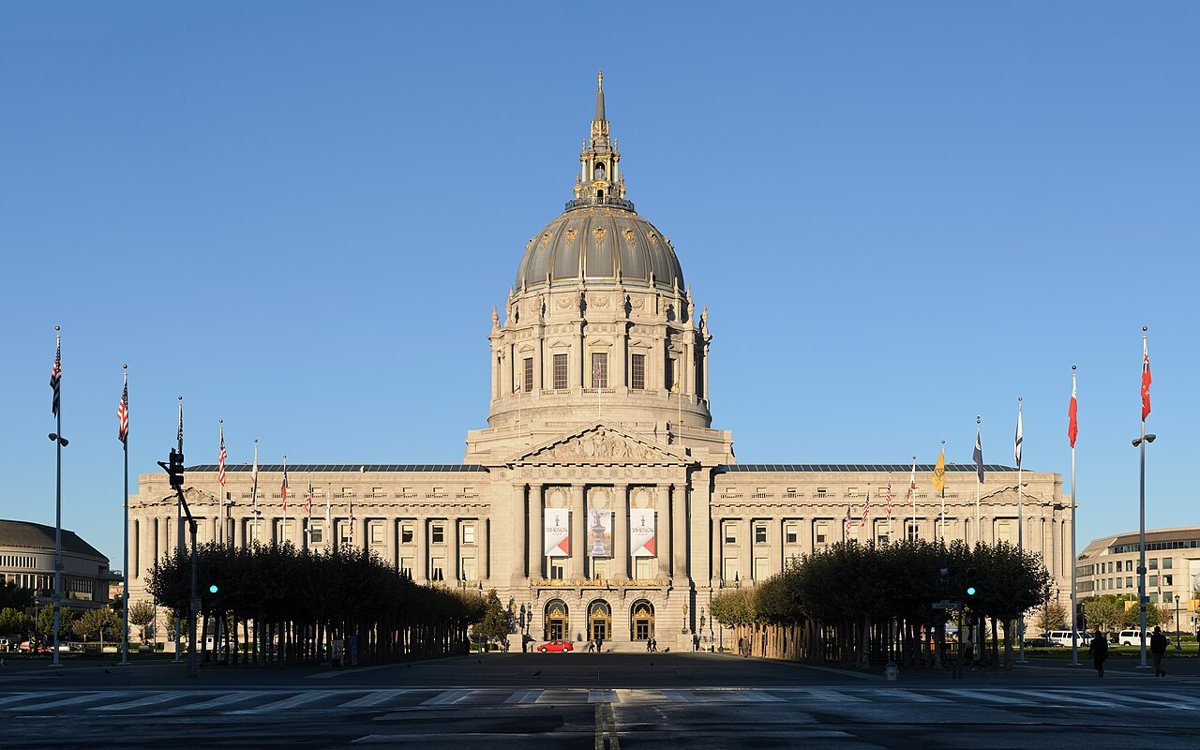
San Francisco City Hall, with its gold-leafed dome taller than the one in Washington, D.C., stands a few blocks east of Hayes Valley proper and rewards a slow look even if government architecture isn't usually your thing. The rotunda is open to the public during building hours, free to walk through, and the marble staircase inside has been the backdrop for enough weddings that you'll likely see one in progress on a Friday. The plaza in front of City Hall hosts a public market on a regular basis and occasional civic events, and it's also where the neighborhood's contradictions are hardest to look away from: a building this grand sits within view of some of the most visible homelessness in the city, a fact that any honest account of Civic Center has to sit with rather than crop out of the photo. That tension isn't a footnote to a Hayes Valley visit, it's part of what the neighborhood actually looks like on a given afternoon, and locals who've watched the area change over two decades don't pretend otherwise.

A Short Walk Northwest to Alamo Square
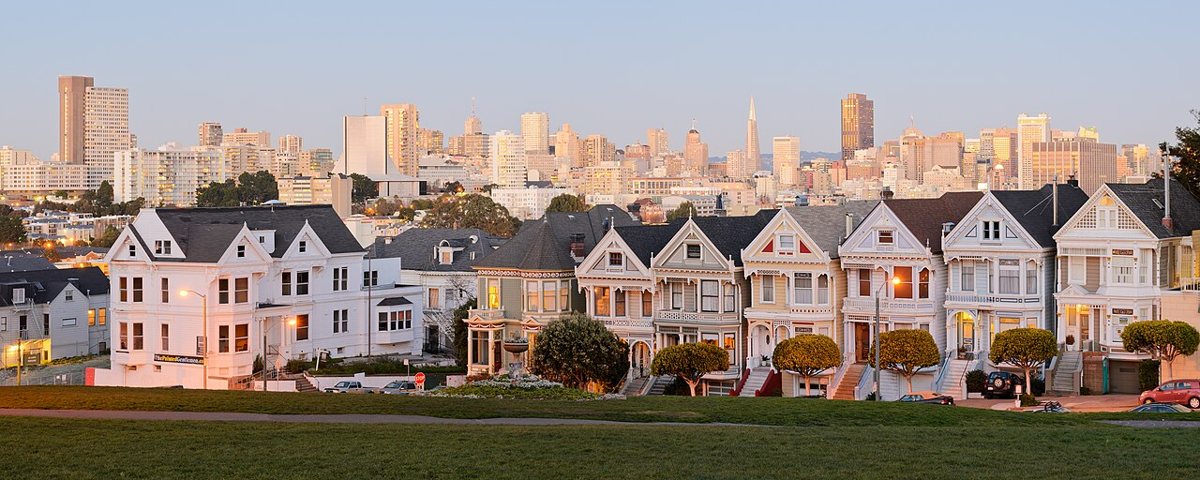
Alamo Square sits about a fifteen-minute walk uphill from Patricia's Green, and it's worth the incline even though the Painted Ladies row of Victorians on its eastern edge has become among the most photographed street corners in the country. The postcard view from the park's crest, with the pastel row houses stacked against the downtown skyline behind them, is a genuine San Francisco tableau and not one this magazine will pretend to discover for you. What's worth knowing is timing: tour buses and photo crowds build through the late morning and stay heavy into early evening, so a walk up before 9am or on a weekday gets you the same view with a fraction of the company. The park itself, beyond the famous row, is a good spot for the kind of unhurried sitting that Hayes Valley's busier blocks don't always allow. Combine it with a Hayes Street walk on the way back down and you've covered most of what a first visit to this stretch of the city should include.

Golden Gate Park, a Little Further Out
Golden Gate Park isn't in Hayes Valley by any reasonable definition, but it's close enough, and enough Hayes Valley days end with someone suggesting a walk over, that it belongs in an honest guide to how locals actually spend a free afternoon here. The eastern edge of the park is a manageable bus ride or a longer walk from the neighborhood, and even an hour inside its eastern meadows and gardens changes the pace of a day that started among shops and performance halls. It's not a Hayes Valley destination so much as a natural extension of one, the place people go when the neighborhood's density starts to feel like enough for one day. Save it for a second half of a longer day rather than trying to force it into a quick Hayes Valley loop.

How Hayes Valley Sits Among Its Neighbors
Part of what makes Hayes Valley easy to love without romanticizing it is how legible its place in the city is. Walk fifteen minutes south and the block-by-block rhythm changes entirely into the Mission, where taquerias and murals set the pace instead of wine bars and design shops. Head the other direction from Alamo Square and you drop into the Haight-Ashbury, still trading on its counterculture history in ways that feel earned rather than staged. The Castro sits a short ride south of that, its own institutions and history distinct from anything Hayes Valley claims. SoMa sprawls to the east past Civic Center, bigger, more industrial, and considerably less walkable in the pedestrian-scaled way Hayes Valley is. None of these neighborhoods blur into each other, and that's worth saying plainly: San Francisco is a city of sharply drawn neighborhoods, not a single blended downtown, and Hayes Valley's identity as a design-and-performing-arts pocket only makes sense in contrast to what's a few blocks away in any direction. A visitor who only sees Hayes Valley sees a real slice of the city, but a thin one.
Where to Eat and Drink Between Stops
Hayes Valley's food and drink scene runs toward wine bars, craft coffee, and small-plate restaurants that cater to a pre-theater crowd on a schedule, which shapes the neighborhood's rhythm more than people expect. Reservations around curtain times get tight enough that walking in without one on an opera night is a gamble. The upside of that pressure is quality: operators here know their audience will pay for a good glass of something and won't linger past a hard deadline, so a glass of natural wine before a show is as much a Hayes Valley ritual as the show itself. It's a different eating culture than what you'll find a mile south in the Mission, where the draw is a proper Mission burrito eaten standing up rather than a paced tasting menu before a downbeat. Both are legitimate ways to eat in this city; they just serve different evenings, and neither one is really a substitute for the other if you're only in town for a couple of days and trying to decide which version of San Francisco eating to prioritize.
An Ideal Evening in Hayes Valley
The neighborhood rewards a loose but deliberate sequence more than a checklist. Arrive in the late afternoon while the light is still good and the shops are open, and let the order run something like this:
- Start at Patricia's Green and see whatever sculpture is currently installed, then cut over to Hayes Street.
- Walk the corridor slowly, one side down and the other back, ducking into whatever storefront catches your eye rather than chasing a specific address.
- Stop at PROXY if there's a pop-up or market running, especially on a weekend.
- Get a glass of wine or a coffee somewhere along Hayes before the evening crowd thickens.
- If you have tickets, walk to the War Memorial Opera House, Davies Symphony Hall, or the SFJAZZ Center with time to spare, since the sidewalks near all three fill up fast in the last stretch before curtain.
- If you don't, let the walk drift toward City Hall at dusk, when the dome catches the last light and the plaza empties out.
None of this requires a car, a reservation made weeks out, or a plan more detailed than knowing roughly which direction you're headed.
Getting There and Timing It Right
Hayes Valley is one of the more transit-convenient neighborhoods in the city, which matters because parking here is genuinely difficult, especially on performance nights when the opera, symphony, and jazz center can all have shows running at once. The 21-Hayes bus runs directly through the neighborhood along its namesake street, and Civic Center's BART and Muni Metro station sits a short walk east, putting Hayes Valley within one transfer of most of the city and the wider Bay Area. The neighborhood itself is flat enough and small enough to cover entirely on foot once you've arrived; most of what's described above sits within a ten-minute walk of Patricia's Green. The one timing note worth internalizing: build in extra buffer on nights with performances at the Opera House, Davies, or SFJAZZ, since the sidewalks and nearby restaurants absorb a surge of people in the thirty minutes before curtain that can turn a five-minute walk into fifteen.
The Bottom Line on Hayes Valley
What makes Hayes Valley worth a deliberate visit isn't any single landmark on this list, it's the compression: an opera house, a symphony hall, a jazz center, a genuinely good shopping strip, and a park that doubles as a small museum of rotating sculpture, all within a walk that barely breaks a sweat. The density came from a freeway's removal and two decades of investment that has also priced out plenty of people who used to call this stretch of the city home, and a neighborhood guide that skips past that would be selling a postcard instead of a place. The city's institutional memory runs long enough to remember what stood here before the boutiques did, and that memory is worth carrying into any visit, alongside an appetite for good wine and a decent pair of walking shoes. Come for an opera ticket or a Saturday afternoon of browsing and you'll likely end up doing both anyway, since the neighborhood was built, quite literally, to make that kind of drifting easy.