Best Food Halls in San Francisco You'll Actually Love
A local's field guide to the city's food halls, from the Ferry Building marketplace to the food courts tucked inside SoMa office towers.
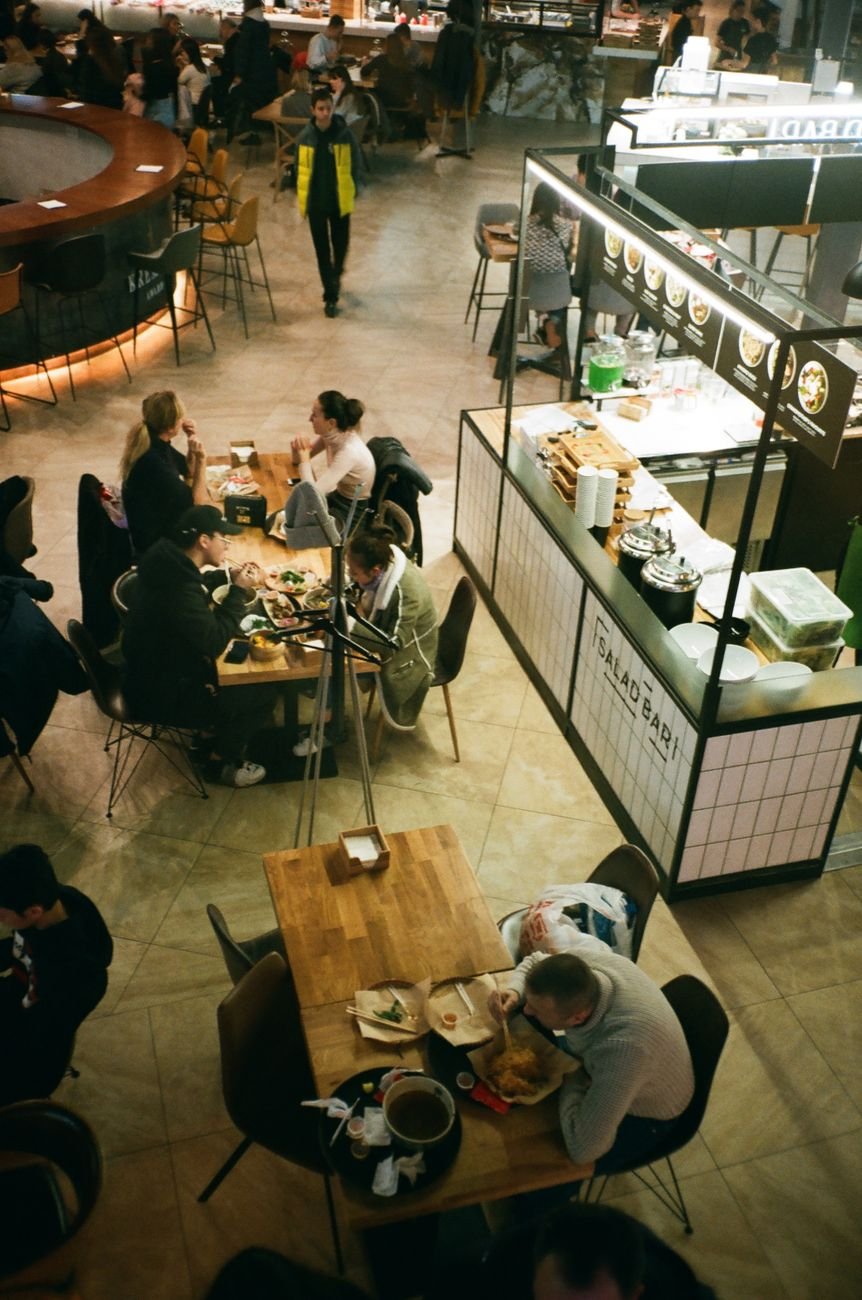
Ask five people waiting for a table at the Ferry Building on a Saturday morning where else to find good food halls in San Francisco, and you'll get five different answers, most of them wrong. That's because the city doesn't really do food halls the way Austin or Las Vegas does, with a developer dropping a dozen stalls under one roof and calling it a destination. What San Francisco has is a scattered, unglamorous mix of marketplaces, indoor food courts tucked into office lobbies, and the odd import from elsewhere that opened here because the rent, for once, made sense. Finding the best food halls in San Francisco means knowing the difference between the ones built for a single office tower's lunch rush and the ones built to hold a crowd on a Sunday afternoon.
The fog matters more here than in most cities that build indoor food courts, if only because it explains why San Francisco leaned indoors in the first place. A patio that's glorious at noon can be gripping a windbreaker by four. Food halls solve a real problem for a city with a marine layer that shows up uninvited: they give a group somewhere to sit that isn't dependent on whether the sun holds.
What makes the best food halls in San Francisco actually work
A good hall solves a specific problem, which is that nobody in your group of six wants the same thing. One person wants noodles, one wants a salad because they're being good about it, one wants whatever smells like it's frying nearby. A hall that works lets all three walk away happy and still sit at the same table. That means real variety, not five versions of the same fast-casual bowl concept with different sauces. It means counters that don't require a wait so long the group scatters and never regroups. And it means seating that isn't an afterthought bolted on near the restrooms, because seating is the whole point.
The other marker of a hall worth the trip is whether it feels like it belongs to the neighborhood around it or whether it could be dropped into any city with a waterfront and nobody would notice. San Francisco's better halls tend to reflect what's actually being cooked nearby, not a generic idea of what a food hall should contain.
Where San Francisco's food halls actually cluster
The most obvious cluster sits along the Embarcadero, anchored by the Ferry Building Marketplace, which is less a food hall in the modern sense than the ancestor of the concept locally: a historic terminal building lined with permanent food and wine merchants, with the Saturday farmers market spilling out into the plaza and along the water. It draws a mixed crowd of commuters cutting through on their way to the ferry, tourists who found it on a map, and locals who've been going since before it was fashionable to call any of this a scene. It gets crowded on weekends in a way that rewards showing up early or accepting the crowd as part of the experience.
SoMa has quietly become the other center of gravity, largely because the neighborhood's dense cluster of office towers created demand for something better than a mall food court, and a few developers obliged. These tend to skew toward the weekday lunch crowd, which means they're often at their calmest and most pleasant on evenings and weekends, when the office workers have cleared out and there's room to actually sit.
Closer to the Mission, the pattern shifts again. This is a neighborhood that never needed a food hall to prove its food culture was serious, given the density of taquerias serving the kind of foil-wrapped, rice-included burrito that locals will argue about for hours, so the handful of newer indoor markets near its edges tend to be smaller and more selective, built around a few vendors rather than a dozen. They work well for a smaller group that wants to sit down without committing to a sit-down restaurant.
How to work a hall with a group
The mechanics of a food hall visit matter more than people think, and most groups get them wrong on the first try. Here's what tends to actually work:
- Send one person to claim a table the moment you arrive, especially on a weekend, before anyone even looks at a menu.
- Split up to scout two or three counters each, then reconvene and compare notes rather than everyone queuing for the same stall.
- Order in stages if the group is large. A first round to share while people are still deciding beats one person finishing their meal while another is still in line.
- Agree on one person to hold the table and the bags while the rest fan out, and rotate that job if the visit runs long.
Timing and the weekend crush
Weekday lunch in SoMa halls runs on office hours, roughly eleven-thirty to one-thirty, and the crowd thins out fast after that. Weekend mornings at the Ferry Building draw the heaviest traffic, tied to the farmers market rather than the marketplace itself, so arriving before ten or waiting until early afternoon avoids the worst of it. Evenings tend to be the underused window across most halls, since the format still reads to a lot of people as a lunch thing rather than a dinner destination, which works in your favor if you'd rather not fight for a seat.
Getting there without a car
The Embarcadero cluster is about as transit-friendly as San Francisco gets, sitting a short walk from the Embarcadero BART and Muni Metro station and served by the F-line streetcars running up the waterfront. SoMa halls are similarly well covered by Muni and BART depending on which stretch of the neighborhood they're in. Parking near either area on a weekend is scarce and priced accordingly, so treat a car as the fallback option rather than the plan. If you want to make a day of it, pairing a marketplace visit with a Mission burrito run is an easy way to eat across two neighborhoods on one transit line.
None of this requires a reservation or a plan more elaborate than picking a neighborhood and a time that isn't peak. The city's food halls were never built to be a spectacle. They were built to solve an ordinary problem, feeding a group of people who don't agree on dinner, and the ones worth returning to are the ones that still remember that's the job. Before you go chasing a ranked list, figure out which neighborhood market fits the day you actually have.