Best Italian in Hayes Valley You'll Actually Love
Hayes Street runs on an opera clock and a lot of mediocre carbonara. Here's how to tell a real Italian kitchen from a pre-show pit stop, and how to eat well on either side of the curtain.
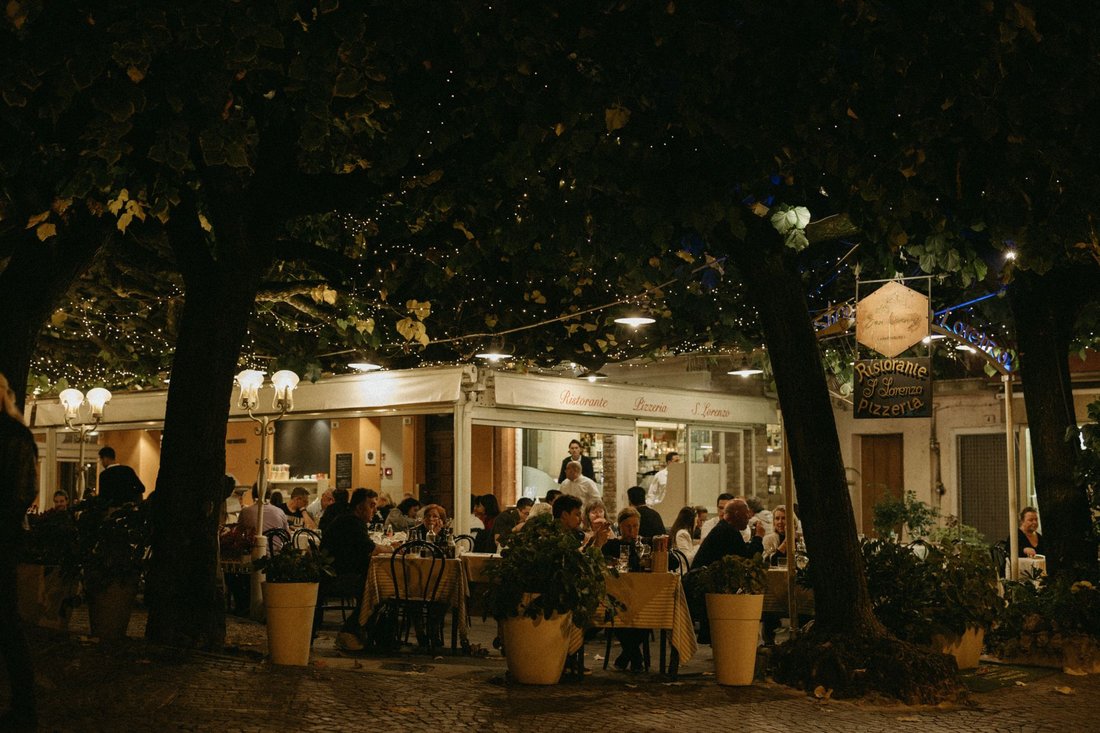
By six-fifteen on a Thursday, Hayes Street between Franklin and Laguna is doing the thing it does most nights of the week: a parade of people in dark coats and decent shoes, walking fast, checking phones, eyeing the two open seats on a patio like they're real estate. Curtain at the opera house is eight. Down the block at the symphony it might be seven-thirty. Everyone within four blocks of Van Ness has somewhere to be, and every kitchen on this strip knows it down to the minute. This is not a neighborhood that eases into dinner. It sprints for ninety minutes, empties out fast, then goes quiet enough by ten that you can hear the 21-Hayes bus sigh to a stop outside. Finding the best Italian in Hayes Valley starts with understanding that clock, because it shapes everything from the size of the dining room to how fast your water glass gets refilled.
Hayes Valley is compact by design. It's a grid of low buildings and narrow storefronts that survived the freeway coming down in the 1990s, and the food scene that grew up in the gap has always leaned upscale-boutique: small rooms, tight footprints, a lot of care packed into not much square footage. That's the backdrop for Italian food here, and it explains why the good places tend to look unassuming from the sidewalk and feel completely different once you're seated.
What Actually Marks a Serious Italian Kitchen in Hayes Valley
Skip the menu with forty dishes and a laminated cover. The kitchens worth your ninety minutes tend to share a few traits, regardless of which cross street they're on:
- A pasta list that changes with the season, not a static menu bolted to a photo of the Amalfi coast. When the cacio e pepe reads the same in July as it does in January, someone stopped paying attention.
- House-made pasta, and a kitchen willing to say so without making it the whole pitch. You can usually tell by the shape selection — a good place is doing at least one filled pasta and one extruded or hand-cut shape, not six versions of the same noodle in different sauces.
- A wine list with a spine of Italian regional bottles, not just Chianti and pinot grigio as an afterthought. Look for a few names you don't recognize from Piedmont, Sicily, or the Veneto. That's usually a sign someone on staff actually cares.
- A menu short enough that you could read the whole thing while you wait for bread. Restraint on the page usually means more attention in the kitchen.
None of that guarantees the best Italian in Hayes Valley experience on a given night, but it's a far more reliable filter than star ratings on your phone, especially in a neighborhood where foot traffic alone can keep a mediocre kitchen full.
The Pre-Show Crush, and How to Work Around It
The single biggest variable in Hayes Valley dining isn't the food, it's the clock. Between about 5:30 and 7:15, tables turn fast and kitchens push out plates at a pace built for people who cannot miss a downbeat. That's fine if you're one of them, but it means the pasta comes when it comes, not necessarily when it's perfectly al dente, and a server juggling six pre-show tables isn't going to linger over the specials. For the version of the meal where the kitchen has room to breathe, eat later. A 7:45 or 8 p.m. reservation, after the crowd has cleared out toward Grove Street and the War Memorial, gets you a calmer room, a server who has time to talk you through the wine list, and a kitchen no longer sprinting. This is also, frankly, when locals who live within walking distance tend to show up, because nobody who lives in Hayes Valley is racing to beat a curtain.
When pre-show dinner is unavoidable, call ahead rather than walk in. Small dining rooms mean small waitlists fill fast, and a five-minute call earlier in the day beats standing on the sidewalk at 6:40 watching your window close. Patio seating, where it exists, is lovely on a clear evening and genuinely cold once the fog rolls in off the park, so bring a layer even in August.
What to Order
Start with something that tells you about the kitchen's hand rather than its ambition: a simple vegetable antipasto, a plate of cured meat, or a straightforward pasta like cacio e pepe or a Bolognese. Those dishes have nowhere to hide. When the sauce is balanced and the pasta has real bite, the rest of the menu is probably worth exploring. Save a heavier braise or a whole-fish preparation for a night when you have time to let the meal unfold rather than the ninety-minute pre-show version. And don't skip dessert out of habit. A good affogato or a simple olive oil cake is a better read on a kitchen's discipline than it gets credit for.
Tourist-Facing Versus Where Locals Actually Go
The giveaway for a tourist-facing room in Hayes Valley usually isn't the food, it's the door. A restaurant that leans hard on a big illuminated sign, a hostess stand stacked with laminated menus in multiple languages, and a patio angled for maximum sidewalk visibility is optimizing for walk-up volume, not repeat neighborhood business. That doesn't automatically make the food bad, but it usually means the menu is built for broad appeal rather than a specific point of view.
Locals tend to gravitate toward the smaller, quieter storefronts a block or two off the main Hayes Street drag, the ones with a short printed menu, a wine list that changes more often than the food does, and a staff that recognizes regulars by their order. Those places rarely have a line at 6 p.m., because the people who eat there know to come at 7:45 instead. Weighing a pre-show dinner against where to eat on a random Tuesday with no curtain to catch, that's usually the tell: the destination spot is built for the former, the neighborhood spot for the latter.
The other local move is treating Hayes Valley as a whole evening rather than a single reservation. It's a walkable few blocks, so a lot of regulars split the night: dinner at one address, then a short walk to a natural wine bar for a last glass and something small before heading home. Nobody who actually lives here expects one restaurant to be the whole night out.
None of this requires insider knowledge so much as patience and a willingness to walk past the busiest window. The best Italian in Hayes Valley isn't hiding, exactly. It's just easier to find once you stop looking for it between 6 and 7 on a performance night.