Best Italian Restaurants in the Mission, Tried and Tested
The Mission is taqueria country. Italian restaurants here operate on the margins of that identity, which is exactly what makes the good ones worth seeking out.
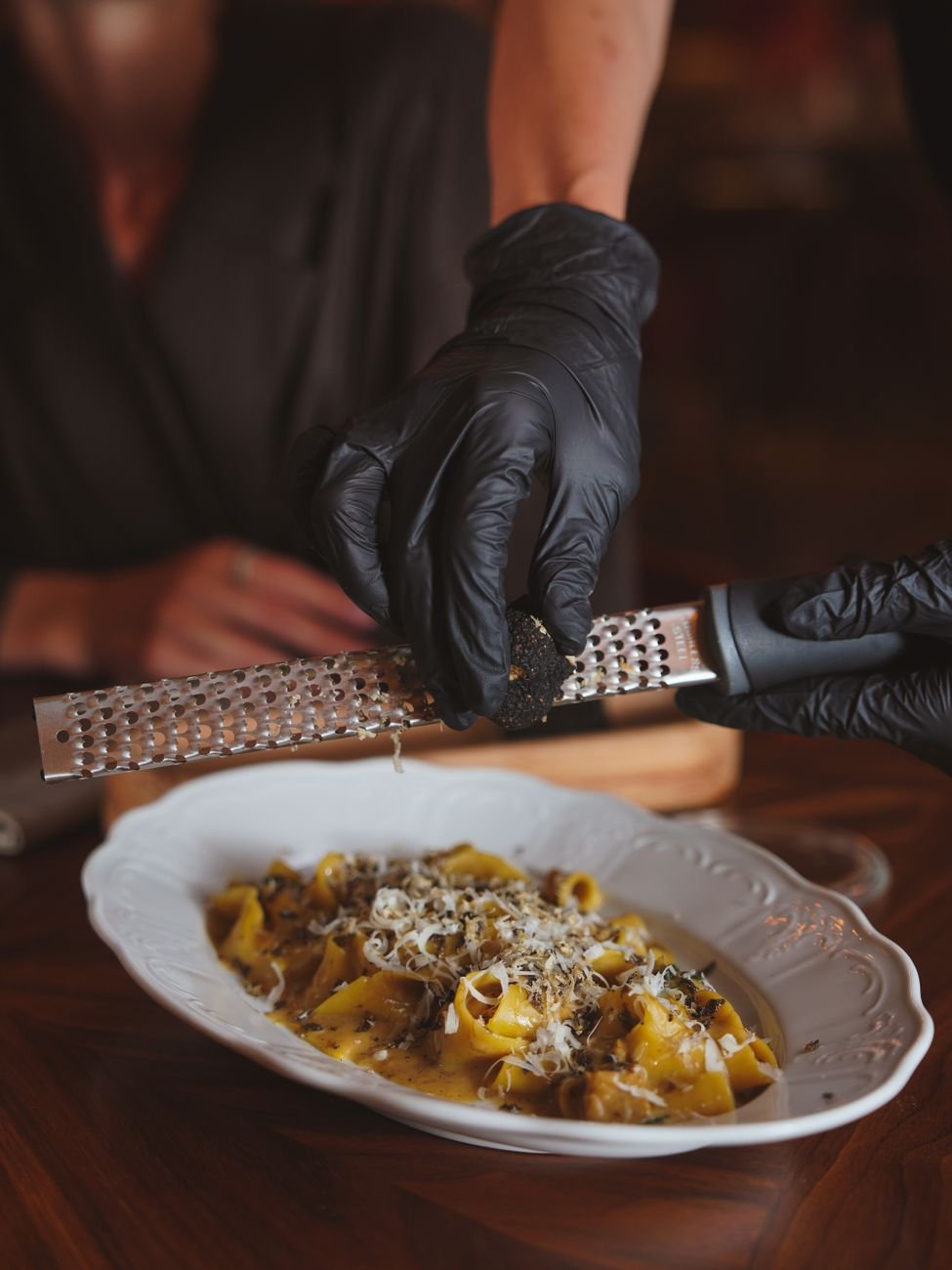
On a Tuesday evening in the Mission, the line at the taqueria on 24th Street wraps past the mural of Frida Kahlo, past the corner where the smell of carnitas and woodsmoke has probably never fully left the air. Somewhere on the same block, a newer place has a chalkboard menu, a short natural-wine list, and a pasta special. This is not a contradiction. It's the Mission in 2026, where the best italian restaurants in the mission coexist with the neighborhood's Latino heart in an arrangement that's sometimes uneasy, occasionally brilliant, and never simple.
Italian food lands differently here than it does in North Beach, where red-sauce tradition is the whole point, or in the Financial District, where a proper cacio e pepe is a power-lunch accessory. In the Mission, the neighborhood's character shapes how Italian restaurants operate and who they're for: working-class roots, decades of gentrification pressure, murals that insist on memory. The places that understand this tend to be better. The ones that don't tend to be expensive and mediocre.
What the Best Italian Restaurants in the Mission Get Right
The standard that matters here is not whether the pasta is hand-rolled or whether the chef trained in Emilia-Romagna. It's whether the restaurant has a genuine relationship with the neighborhood, with the fog that rolls through Valencia Street around 7 p.m., with the fact that its neighbors are the neighborhood's taquerias, with the reality that the people eating there are more likely to live within six blocks than to have come in from the Marina.
Great Italian in the Mission tends to be modest in scale, serious about its sourcing, and honest about what it is. The wine lists lean toward low-intervention Italian producers, which is consistent with the neighborhood's general natural-wine sensibility. The menus are short. The rooms are usually small and loud in the way that means the kitchen is actually cooking, not finishing dishes from a commissary.
What to order is almost always whatever is freshest and simplest. Good Italian cooking is not complicated. A good pasta requires good flour, good eggs or semolina, good technique, and restraint. A good ragù is patience. Neither requires 18 ingredients or a story about a grandmother in Calabria.
How to Think About Italian Dining Here
The Mission's food identity was built on the burrito, foil-wrapped, rice included, heavy in the hand, honest about what it is. Italian restaurants that open here are making an argument that they belong in that same ecosystem of real food and real neighborhoods, alongside the city's better Italian rooms. The ones that succeed tend to share some qualities:
- Pasta is house-made, or they tell you it isn't. This distinction matters. Dried pasta is not shameful, but pretending otherwise is. The places worth your time are transparent.
- The menu changes. Seasonality in Italian cooking is not a marketing concept; it's structural. Spring peas, winter squash, Dungeness crab when the season is right. A menu that hasn't changed in two years is a flag.
- The wine list is short and considered. You don't need 80 bottles. You need 15 that were chosen by someone who actually cares, ideally including some natural Italian producers that aren't yet on every other list in the city.
- The room doesn't apologize for itself. The ones that try too hard to signal fine dining tend to lose the thread. The better ones feel like someone's home kitchen scaled up slightly: worn wood, low light, the noise of a full room.
What to Order, Generally Speaking
Pasta first, always, whatever the kitchen is making fresh that week. After that, look at the secondi for anything braised. Braising technique applied to California-raised meats or Pacific seafood is one of the more consistently rewarding things happening in this city's mid-tier restaurants right now. Skip the burrata if it's on every appetizer menu in a five-block radius; it usually means the chef is coasting on a reliable crowd-pleaser rather than cooking.
Bread matters more than most people admit. Good Italian bread service, real focaccia or a proper sourdough (and yes, the city's sourdough culture and Italian bread culture have a natural affinity here), signals that the kitchen is paying attention to fundamentals rather than just the photogenic dishes.
For wine, ask what's open. The by-the-glass program at a serious small Italian restaurant in the Mission is often more interesting than the printed list suggests, because bottles get opened for tastings, staff meals, and experiments. A bartender or server who knows what's breathing behind the bar is usually your best resource.
A Note on Neighborhood Context
The Mission is not a theme park of itself, and the Italian restaurants that treat it as charming backdrop, the murals as décor, the neighborhood's history as ambiance, tend to feel extractive in a way that locals notice immediately. The better places are embedded. They hire locally, they source from the Ferry Building and from the Bay Area's farm network, and they understand that the neighborhood's broader dining identity is one they're joining, not displacing. The good ones treat the Mission's other Italian tables as company, not competition.
This matters because the Mission has been through enough cycles of boom and bust to be skeptical of newcomers. A restaurant that opens with a lot of noise and closes in 18 months is not a loss that only affects investors. It's a loss that affects the block, the people who worked there, the regulars who built it into their week. The Italian spots with staying power here tend to be the ones that understood this from the beginning.
The fog comes in off the Pacific around dinner time, and the streets cool fast. It's good weather for a bowl of ribollita, a glass of Sicilian red, and the particular pleasure of eating Italian food in a Mexican neighborhood in a city that has always been more complicated, and more interesting, than the postcard version of itself.